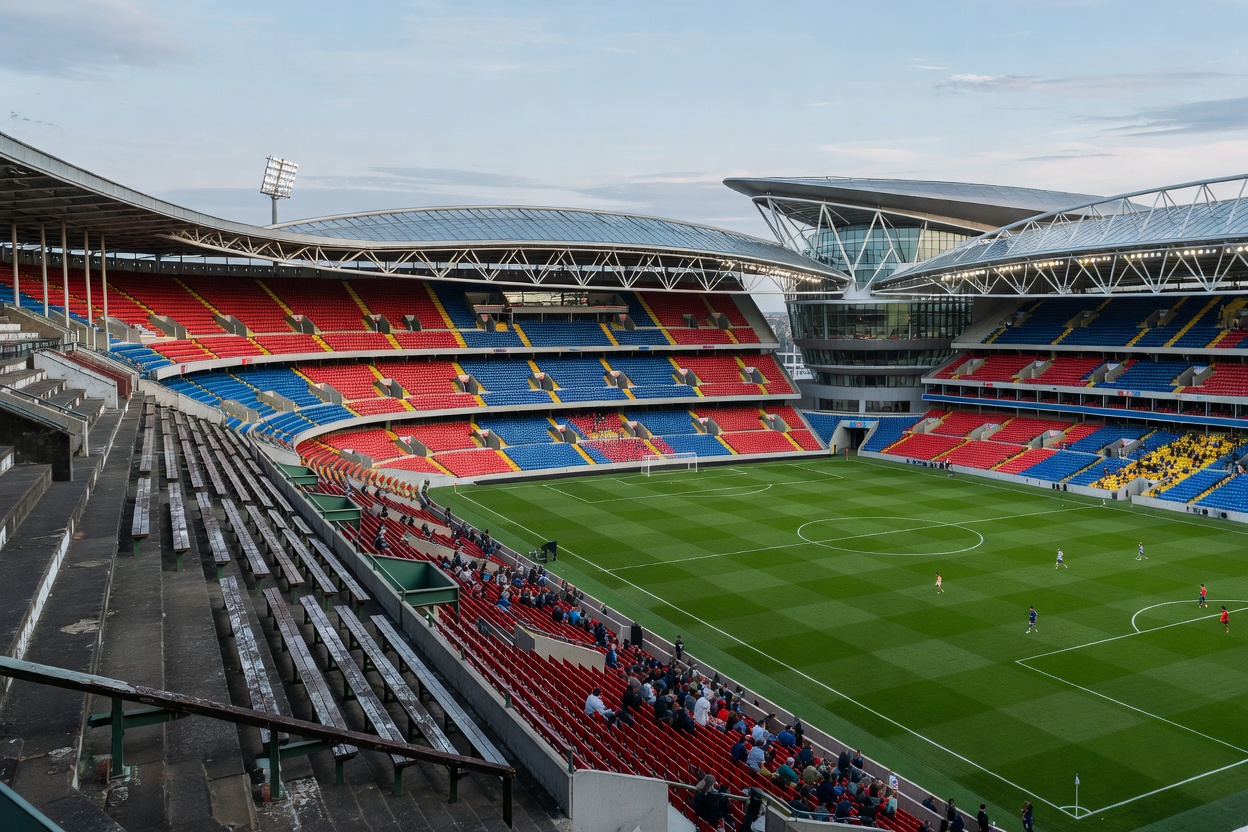
Grounds grow through decisions
Football grounds often began as simpler playing spaces and developed in response to changing crowds, safety expectations, transport patterns and the resources available to their operators. A new stand might replace a terrace; a roof could be extended; turnstiles and concourses might be reorganized. These changes do not always arrive as a single master plan. The result can be a stadium whose edges and stands tell different stories.
Look for transitions rather than assuming every building element belongs to the same era. Differences in brickwork, roof profiles, entrance scale or the alignment of stands may indicate successive phases of work. Such clues are not a complete history on their own, but they help visitors see a ground as an evolving place rather than a static image.
Preservation and modernization
Keeping historic features can preserve a recognizable connection to a club, neighbourhood or local tradition. A familiar stand, entrance or street approach may matter as much to a visitor’s sense of place as the stadium’s name. But preservation also has practical limits. Older structures may not easily accommodate contemporary circulation, accessible routes, facilities or operational needs. Careful adaptation can retain meaningful details while changing how the wider venue functions.
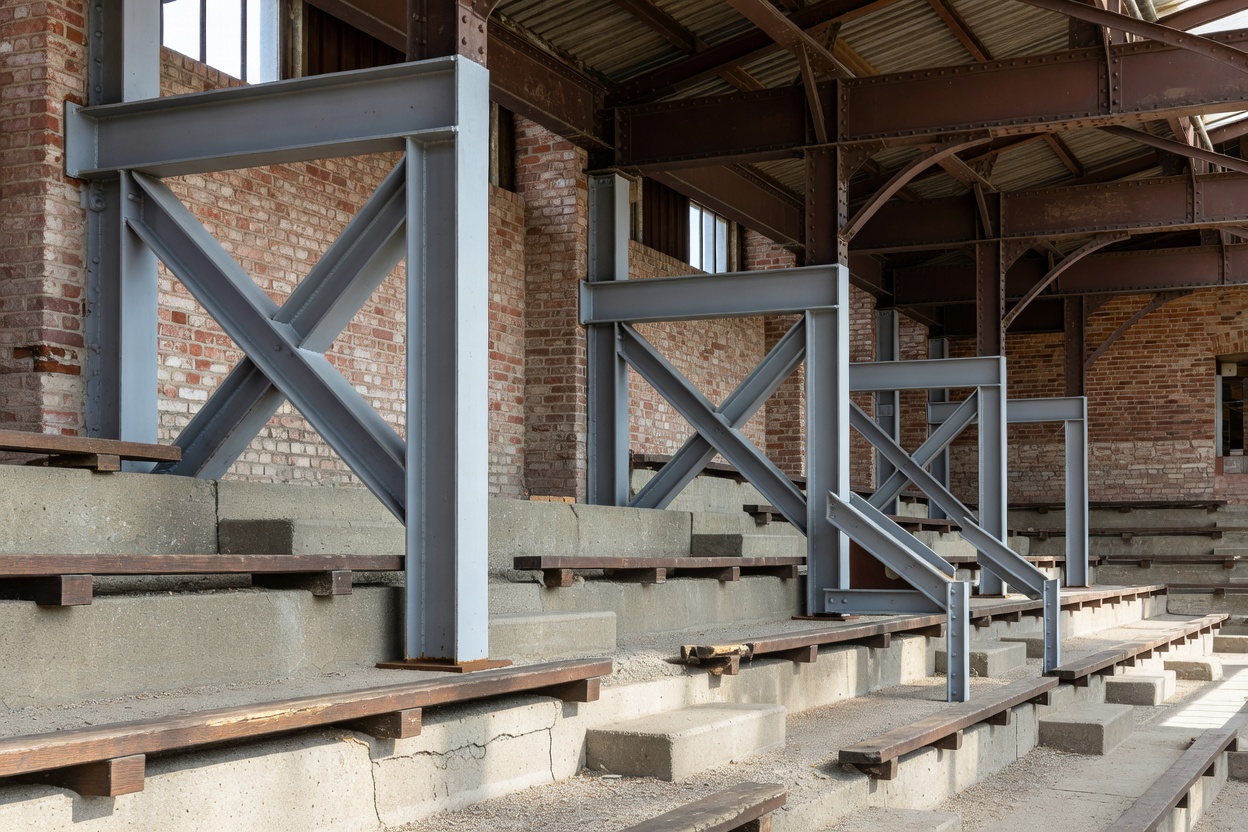
Modernization can bring improved access, more legible entrances and better visitor services, but rebuilding also changes how a ground feels and how it meets its surroundings. A project can preserve parts of an older structure, incorporate memorabilia or maintain a familiar approach, while substantially altering the seating bowl. The important question is not simply whether a stadium is old or new, but which elements of its history remain visible and useful.
Expansion, redevelopment and relocation
Where a site allows it, redevelopment can replace or extend stands while keeping the broader location intact. This continuity may matter to people who associate a particular district with matchday routines. Tight urban sites can make work complex: nearby streets, homes and other uses affect access and construction choices. Staged work may help maintain some operations, although the experience can change as sections are adapted.
Relocation offers a different set of trade-offs. A new site may make space for a purpose-designed venue and a more coordinated visitor route. It may also change the relationship between the stadium and its established local setting. Travel patterns, familiar meeting places and the identity attached to the old ground can all be affected. Comparing the former and current locations through maps, photographs and local interpretation can help explain what was gained, what was lost and what has been carried forward.
Changing expectations of spectators
What visitors expect from a stadium has shifted over time. A match ticket now sits within a wider experience that can involve multiple entrances, digital information, varied seating choices, food areas and clear accessibility arrangements. These expectations influence design and refurbishment, but they do not remove the importance of football’s older rituals. A good reading of stadium history considers the everyday practicalities alongside the memories associated with stands, songs and routes.
How history shapes a visit
Visitors often encounter history in small, unplanned ways: a change in brickwork, a surviving turnstile detail, an unusual angle between stands or the location of an old entrance. Stadium tours and museum-style displays, when offered by a venue, may provide a more structured account. Availability and content vary, so check the operator’s information before building a visit around them.
When exploring, respect barriers and event restrictions. Some areas may be closed for operational, safety or privacy reasons. Photography should not interfere with other visitors, staff or local residents. Treat historical interpretation as a starting point, then consider how a venue’s architecture and present-day use have shaped its story.